Flood Irrigation
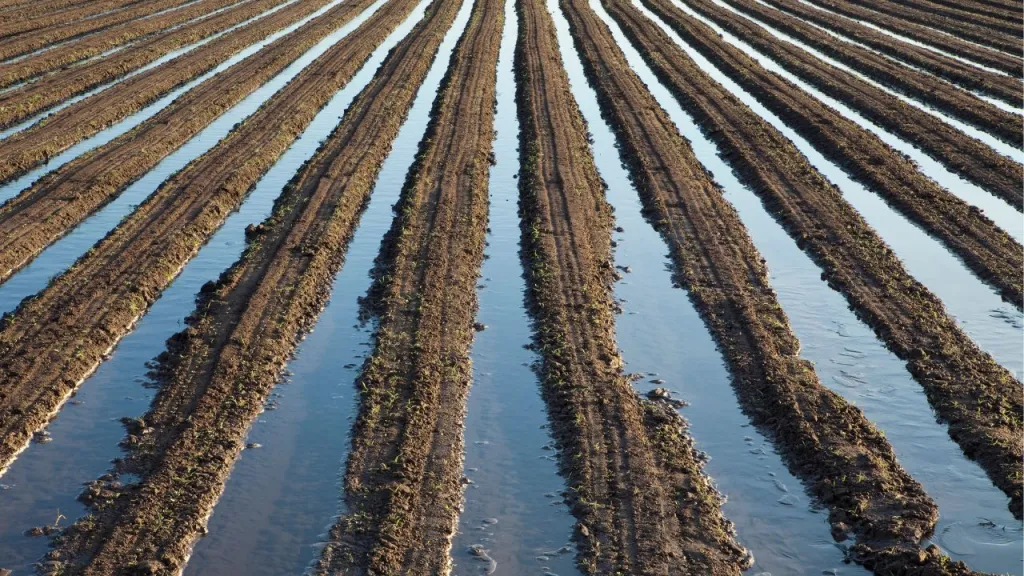
Flood irrigation, also known as basin irrigation, is one of the oldest and simplest irrigation methods where water is allowed to flow across the field surface, flooding the entire area. This traditional method involves dividing fields into basins or borders and filling them with water until the soil is saturated. Water is typically supplied through channels or ditches from a water source, and the flow is controlled by gates or temporary barriers. While this method is simple and requires minimal equipment, it is the least water-efficient irrigation system. In Oman and the GCC, flood irrigation is still used in some traditional farming operations, particularly for rice cultivation, date palm groves, and large field crops where water availability is not a major constraint. However, due to water scarcity concerns, many farmers are transitioning to more efficient systems.
Efficiency
50%
Water savings
Low
System overview
Flood irrigation, also known as basin irrigation, is one of the oldest and simplest irrigation methods where water is allowed to flow across the field surface, flooding the entire area. This traditional method involves dividing fields into basins or borders and filling them with water until the soil is saturated. Water is typically supplied through channels or ditches from a water source, and the flow is controlled by gates or temporary barriers. While this method is simple and requires minimal equipment, it is the least water-efficient irrigation system. In Oman and the GCC, flood irrigation is still used in some traditional farming operations, particularly for rice cultivation, date palm groves, and large field crops where water availability is not a major constraint. However, due to water scarcity concerns, many farmers are transitioning to more efficient systems.
Best for crops
Advantages
- Very low initial investment cost - minimal equipment needed
- Simple to operate - requires minimal technical knowledge
- Low maintenance requirements
- Suitable for flat terrain and large fields
- Can be used for crops that tolerate standing water like rice
- Traditional method familiar to many farmers
- No need for pumps or pressurized systems
- Can help with soil leaching of salts in some cases
Disadvantages
- Very low water efficiency - significant water loss through evaporation and runoff
- High water consumption - uses 2-3 times more water than efficient systems
- Uneven water distribution - water may not reach all areas uniformly
- Can cause waterlogging and soil compaction
- Not suitable for sloped or uneven terrain
- Higher risk of soil erosion
- Can lead to nutrient leaching beyond root zone
- Requires large amounts of water which is scarce in arid regions