Center Pivot
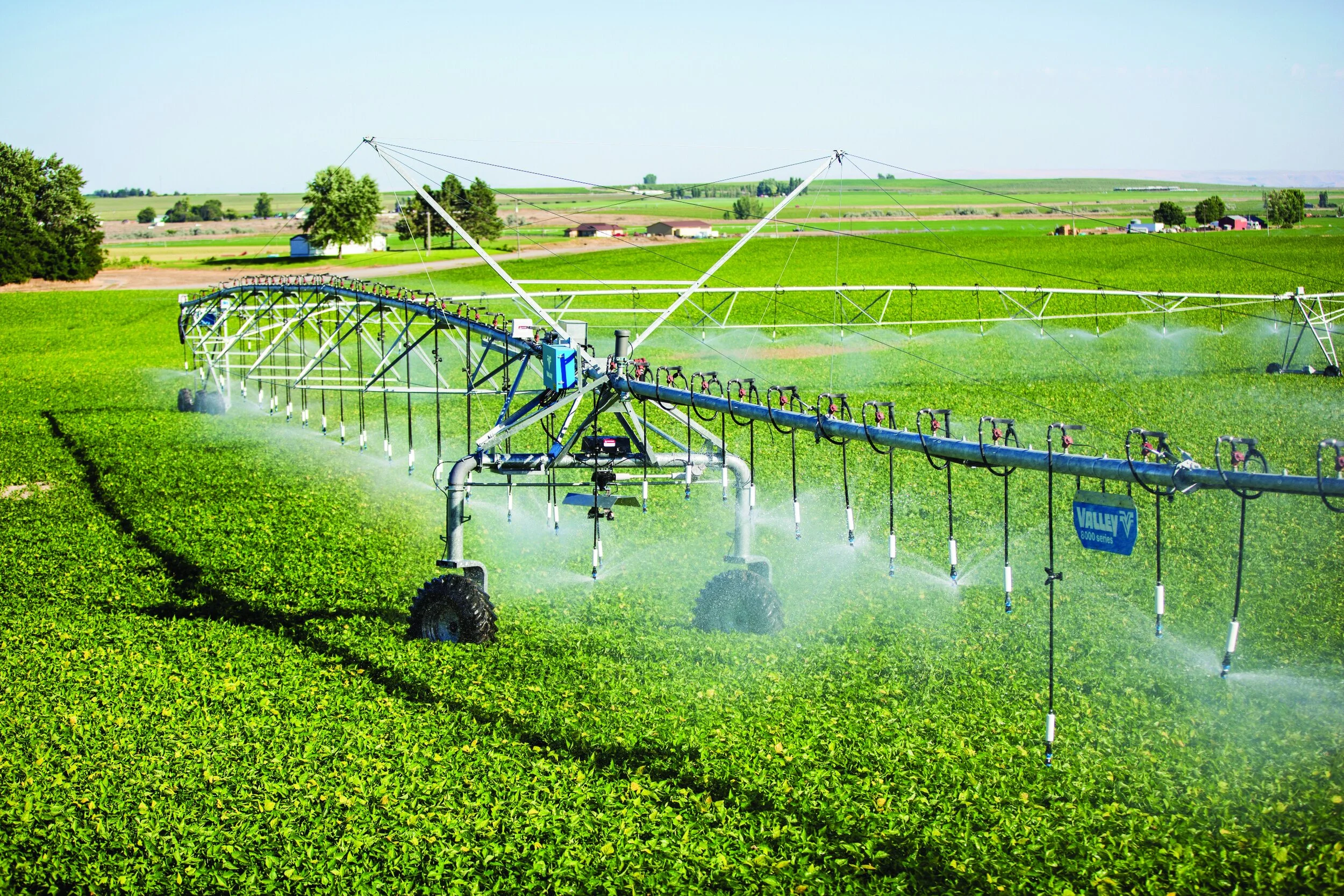
Center pivot irrigation is a mechanized sprinkler system that consists of a long pipe structure mounted on wheeled towers that rotate around a central pivot point, creating a circular irrigated area. The system is automated and can cover large areas efficiently, typically irrigating 50-150 hectares per system depending on the length of the pivot arm. Water is pumped from a central well or water source and distributed through sprinklers or sprayers mounted along the pivot arm. The system moves slowly in a circular pattern, applying water uniformly across the field. Center pivot systems are highly efficient for large-scale commercial farming operations and are commonly used for field crops like wheat, corn, alfalfa, and vegetables. In Oman and the GCC, center pivot systems are increasingly being adopted for large commercial farms due to their efficiency and automation capabilities, though the high initial investment limits their use to larger operations.
Efficiency
80%
Water savings
Medium
System overview
Center pivot irrigation is a mechanized sprinkler system that consists of a long pipe structure mounted on wheeled towers that rotate around a central pivot point, creating a circular irrigated area. The system is automated and can cover large areas efficiently, typically irrigating 50-150 hectares per system depending on the length of the pivot arm. Water is pumped from a central well or water source and distributed through sprinklers or sprayers mounted along the pivot arm. The system moves slowly in a circular pattern, applying water uniformly across the field. Center pivot systems are highly efficient for large-scale commercial farming operations and are commonly used for field crops like wheat, corn, alfalfa, and vegetables. In Oman and the GCC, center pivot systems are increasingly being adopted for large commercial farms due to their efficiency and automation capabilities, though the high initial investment limits their use to larger operations.
Best for crops
Advantages
- Covers very large areas efficiently (50-150 hectares per system)
- Highly automated - minimal labor required for operation
- Uniform water distribution across the entire field
- Can be equipped with precision technology and sensors
- Efficient water use compared to traditional surface methods
- Can operate on various terrain types with proper setup
- Low operating labor requirements
- Can be used for fertigation and chemigation
Disadvantages
- Very high initial investment cost
- Requires large, circular fields (corners are not irrigated)
- Needs professional installation and technical expertise
- Higher maintenance costs due to mechanical components
- Requires reliable power supply for continuous operation
- Not suitable for small farms due to scale and cost
- Can be affected by strong winds
- Limited to specific field shapes (circular coverage)